
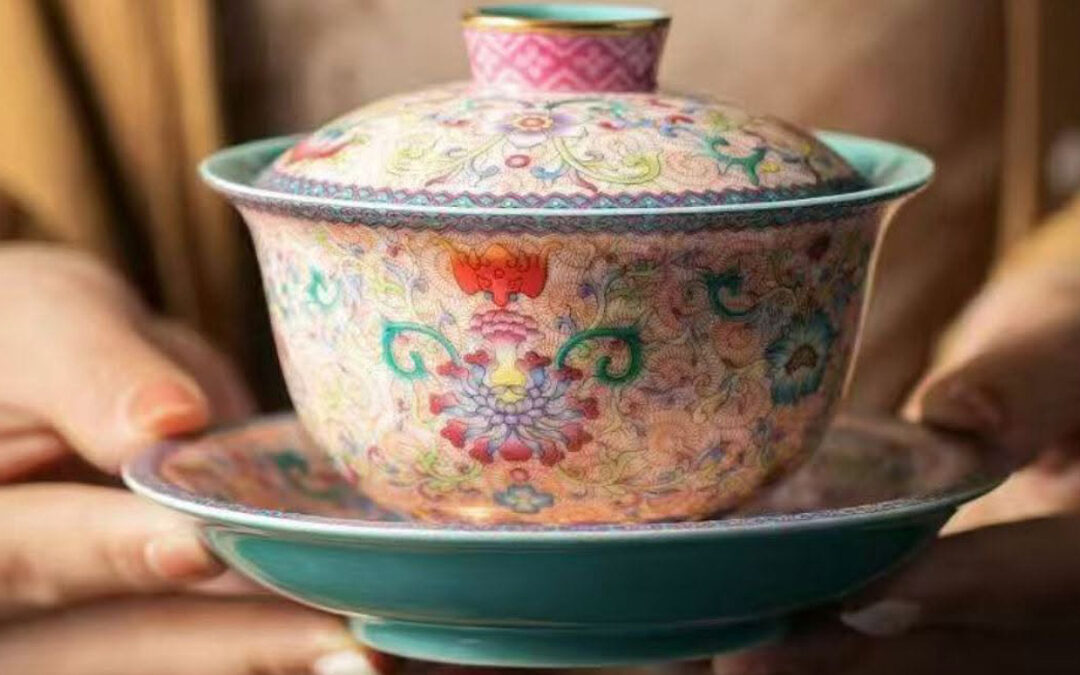
Tea usually arrives at the end of a Chinese meal, poured almost as an afterthought while the bill is settled. That habit does the leaf a real disservice.
Handled with intent, tea works the way wine does across a tasting menu, cutting richness, bridging courses and steering the shape of the whole progression. Guests exploring Cantonese cuisine often find it the most unexpected part of the evening, since so few tables treat tea as a pairing at all. Tea service at 黑珍珠 The Black Pearl works to the same logic that guides the food.
What Tea Actually Does
Tannin scrubs fat from the palate. Warmth settles the stomach after a heavier course. Aroma, arriving before the first sip, quietly sets up the dish that follows.
A roast meat course shows this clearly. Follow crisp pork belly with an aged ripe pu’er, mellow and faintly earthy from years of slow fermentation, and the fat lifts almost instantly, leaving the mouth ready for the next plate. Try the same trick with a jasmine dragon pearl and the tea disappears underneath the dish. Matching by weight comes first, and most of the finer decisions follow from there. Temperature plays its part as well, since a pot left to cool loses the aromatics that made the pairing work in the first place.
Pairings We Keep Coming Back To
Our tea selection runs from delicate spring greens to aged pu’er, and our team holds a short mental list of combinations that rarely disappoint:
- Steamed dim sum with Anxi Tieguanyin, whose clean, orchid-sweet character keeps the pastry tasting light
- Roast duck or char siu with an aged ripe pu’er, for its earthy pull against the fat
- Steamed fish with Silver-needle Pekoe, so nothing overwhelms the flesh
- Braised abalone with Fenghuang Dancong, its honeyed, orange-red infusion echoing the sauce
- Clay pot rice with Dahongpao, a Wuyi rock tea whose roast adds a toasty edge to the crust
- Sweetened yam paste or almond cream with our Beauty & Glow Tea, a Dianhong Golden Needle blended with rose
The Detox & Wellness Tea, made with premium Anji white tea, is light enough to reset the palate after anything spiced or heavily roasted. The Chenpi Old White Tea, which marries aged Fuding white tea with Xinhui tangerine peel, turns faintly medicinal on the first infusion before settling into something rounder, and it is the pot to ask for at the end of a long dinner.
The Ritual Around the Pot
Pouring carries its own etiquette. The host serves everyone else before themselves, a light tap of two fingers on the table says thank you, and a lid left ajar signals that the pot needs refilling. Small gestures, though they turn service into something shared. Our pots arrive with eight cups, which is part of why a single tea carried across a meal tends to suit a table better than a different pour for every course.
Guests who enjoyed working through the world of Chinese liquor with us tend to take to a tea flight just as readily.
Where to Start
Ask us. Our team will happily suggest a pot to sit alongside whatever you have ordered, and one well-chosen tea carried across a meal often works better than switching for every course. Beginners usually get on best with the Anxi Tieguanyin, which sits comfortably in the middle of the spectrum and flatters almost everything on a ‘Yue’ menu, or the Frozen Top Oolong from Nantou, sweeter and more floral. Anything on the list can also be served cold-brewed, which strips out the astringency and suits a warm afternoon better than a hot pot does. Our set lunch promotion in Singapore makes an easy first attempt, since a shorter midday progression is simpler to read a single pot against. Rooftop tables at 黑珍珠 The Black Pearl suit the ritual particularly well, with skyline views and a pot that keeps refilling itself for as long as the conversation lasts.
Start With a Single Pot
Tea rewards curiosity far more than expertise. Order something you have never tried, then pay attention to what it does to the dish in front of you.
Reserve your table, ask what the kitchen is pouring that evening, and let the leaf shape the hours that follow.